How to Search Criminal Dockets
For a Howard County criminal docket, the online route is the statewide Nebraska Judicial Branch Case Information service. It is often called JUSTICE case search. The service returns case summaries, parties, financial entries, and the register of actions. Some document images appear where access rules permit. Pick the court with care. Misdemeanors, infractions, city ordinance violations, traffic matters, and felony preliminary hearings usually sit in County Court. A felony bind-over or other general-jurisdiction criminal matter lands in District Court. Keep the first query narrow. A full last and first name, Howard County, the court type, an approximate year, and a known case type will cut down false matches. Before opening a result, compare the caption, party role, year, court, judge, and case type. A similar name alone proves nothing. Once a result checks out, save the case number. The clerk can then pull an identified filing, or you can track a future setting.
- Open the official JUSTICE one-time search or the subscription route, then select the court and Howard County.
- Enter a complete name when known. Leave out an uncertain middle initial because exact matching can exclude a result.
- Review the matching case details and read the register of actions as the chronological criminal docket.
- Use the case number to request a document, confirm a setting, or ask the Howard County Clerk Magistrate about an access problem.
Note: A missing online result has many innocent explanations. Spelling differences, recent filing lag, the wrong court selected, a transfer, or a restriction can all hide a case from a Howard County docket search.
Howard County Criminal Search Fields
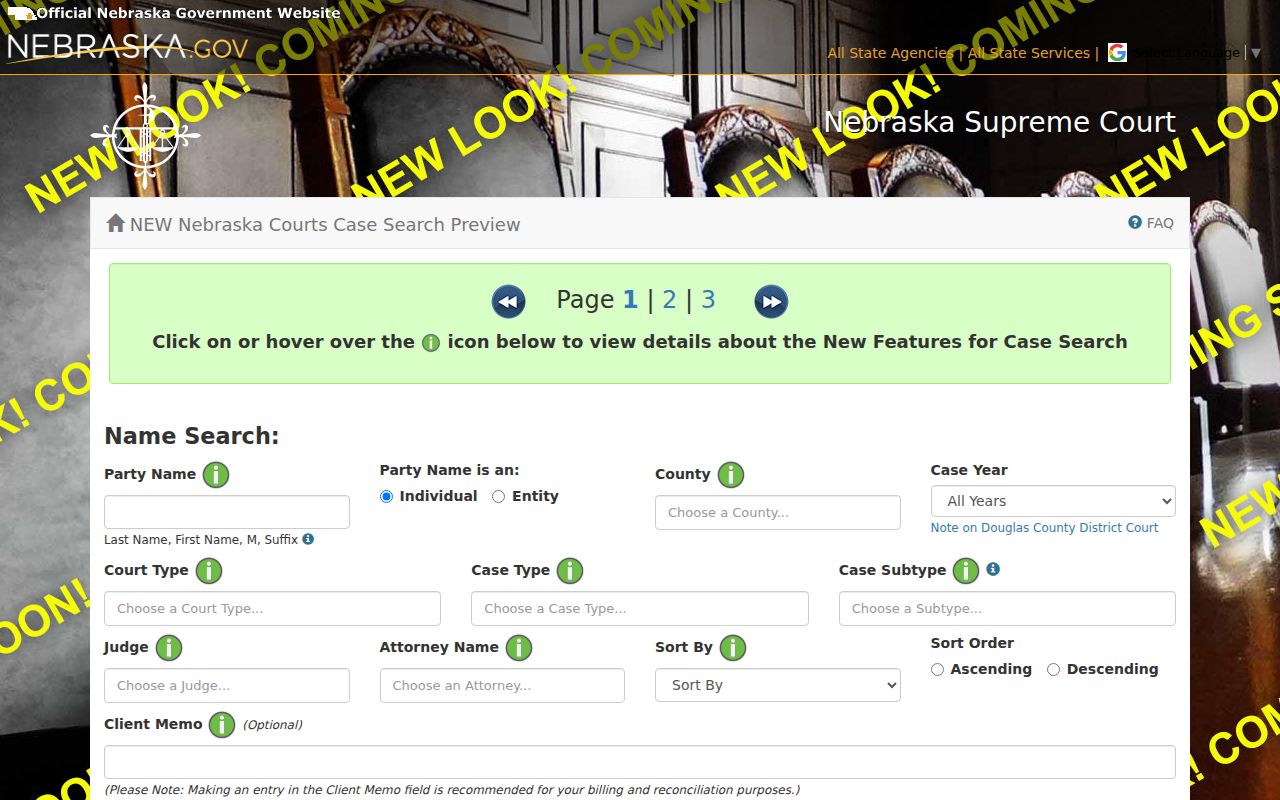
The official JUSTICE search demonstration makes clear why preparation beats a broad name query. Party information pairs with county, year, court, case type, judge, attorney, and sort options. The search covers the whole state. That makes the Howard County filter essential for a common name. Once a match is confirmed, the case number is the identifier to keep.
| Field | Use for a Howard County criminal search | Practical note |
|---|---|---|
| Party name | Find a likely case | Use complete last and first names when available. |
| County | Limit results to Howard | County alone is not enough to run the search. |
| Court and type | Separate County Court and District Court | Criminal court paths differ by charge level and stage. |
| Year | Refine a likely match | Use an approximate year if the filing year is known. |
| Case number | Return to a confirmed record | Keep it for calendar, copy, and clerk requests. |
The official JUSTICE search-fields demonstration captures the party, court, county, type, and year choices together.
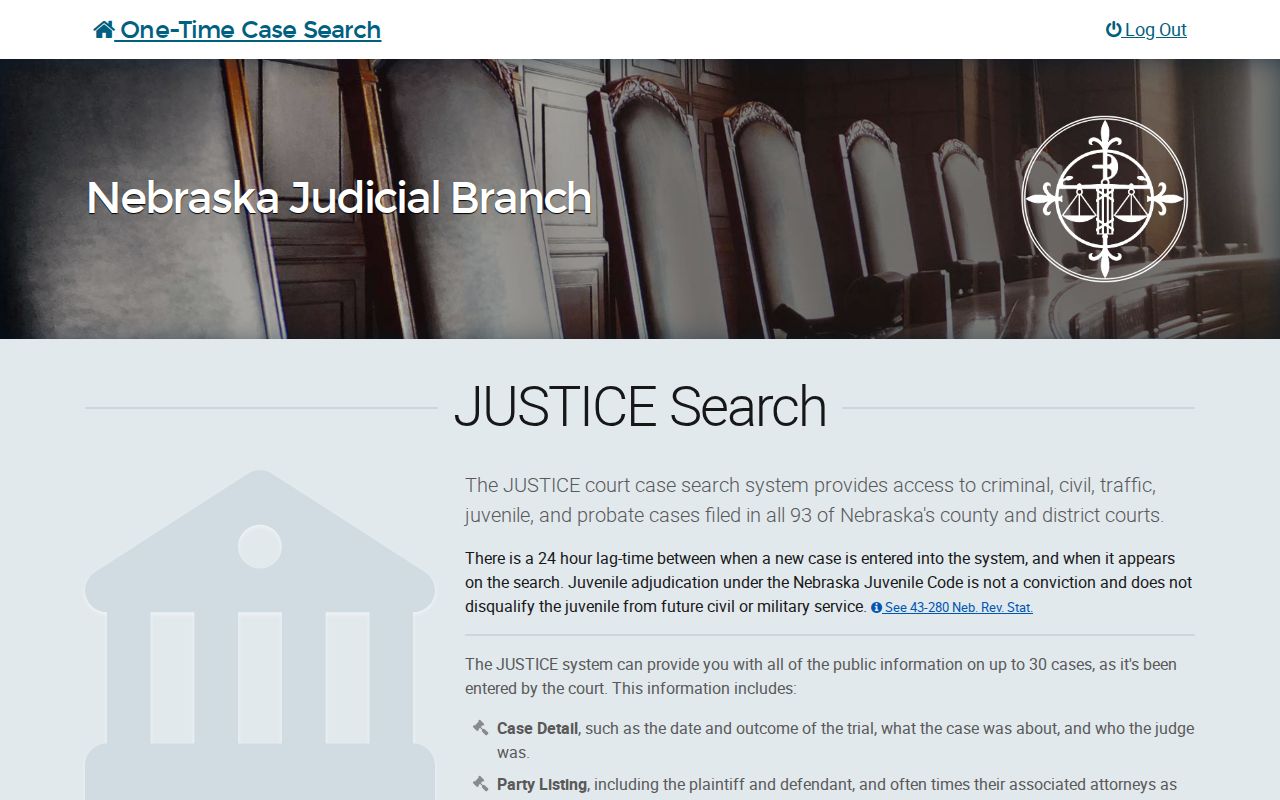
A one-time JUSTICE search is a paid, time-limited option. It carries a $17 charge even when nothing comes back, and it covers up to 30 records for three days of access. Gather your identifiers first so you are not paying for a string of loose searches.
The official one-time search form illustrates the current search entry and terms screen.
What a Criminal Docket Shows
A criminal docket is the court's event history, not a story of what happened. The register of actions lists filings, hearings, orders, and later recorded action. Case detail can include the caption and party roles. It may also show case type, charges or offense information, financial entries, and a disposition. A linked document image depends on its filing date. A statute, court rule, or policy can also restrict it.
| Case number | A court-assigned identifier, such as CR 14 20304; Howard County's component is 49 in the documented system pattern. |
|---|---|
| Caption and role | The case title and each listed procedural role. Neither alone proves guilt or liability. |
| Register of actions | The dated sequence of filed documents, hearings, orders, and other recorded events. |
| Setting | A scheduled arraignment, motion, review, trial, or other court event, separate from its later result. |
| Disposition | A recorded status or outcome. Obtain the order when an official copy is required. |
A charge, a preliminary-hearing entry, or an arrest-related filing is not a conviction. Treat the word "disposition" the same way. It is only a docket label, and the underlying order is the proper source for the court's full ruling.
Howard County Criminal Court Split
Howard County runs two linked criminal court paths. The County Court takes the limited-jurisdiction matters that usually come first. The Eighth Judicial District Court handles the general-jurisdiction felony stage. It takes those cases once they reach that level. One local court contact listing serves both. Even so, the court filter still matters in any docket search.
| Howard County court path | Typical criminal docket coverage | Search choice |
|---|---|---|
| County Court | Misdemeanors, infractions, city ordinances, traffic, and felony preliminary hearings | County Court and Howard |
| District Court, Judicial District 8 | Felony and other criminal proceedings after the applicable case path | District Court and Howard |
The split trips up many searchers. A County Court-only search can miss a matter that moved to District Court, and a District Court-only search can miss the County Court proceedings that stayed behind.
Stages on a Criminal Docket
Howard County criminal entries read best as a sequence. The filing opens the court record. An arraignment covers the charge and plea stage. Pretrial events may bring motions, reviews, or a preliminary hearing. From there the docket records a plea or trial event, a disposition, and sentencing if the case reaches those stages. Each event lands in the register on its own entry date.
Criminal docket flow: Filing → Arraignment → Pretrial → Plea or Trial → Disposition → Sentencing.
A felony preliminary hearing often starts in County Court. The matter can then be bound over to District Court. Check the court name and the newest entries before assuming a case is still set where it began.
Howard County Criminal Filing Snapshot
FY2025 data shows the mix behind a Howard County criminal docket. Count filings, not people. These are not convictions, and they are not pending cases. The County Court report splits felony, misdemeanor, and adult problem-solving matters. It does not lump them into one criminal category. The District Court report uses its own smaller, differently organized criminal categories.
The FY2025 District Court report also lists three Felony 1 filings and 68 total adult filings for Howard. Those figures are a good reminder to keep court type and case type as separate filters in a criminal docket search.
Which Court Holds Criminal Dockets
Howard County keeps its criminal dockets with the court clerk, not the county administrative office. Lisa Johnson, the Howard County Clerk Magistrate, serves as the local contact for County Court. She is also the state-listed contact for Howard District Court. For copies, certification, the register of actions, or help at a public terminal, go through the court clerk and the statewide JUSTICE system rather than the County Clerk's government-record side.
The official Howard County Court page places the office at 612 Indian Street, Suite #6, St. Paul, Nebraska 68873. The direct phone is 308-754-4192. Call or visit with a case number in hand. Staff can then pull an identified record instead of treating your request as a search of everything.
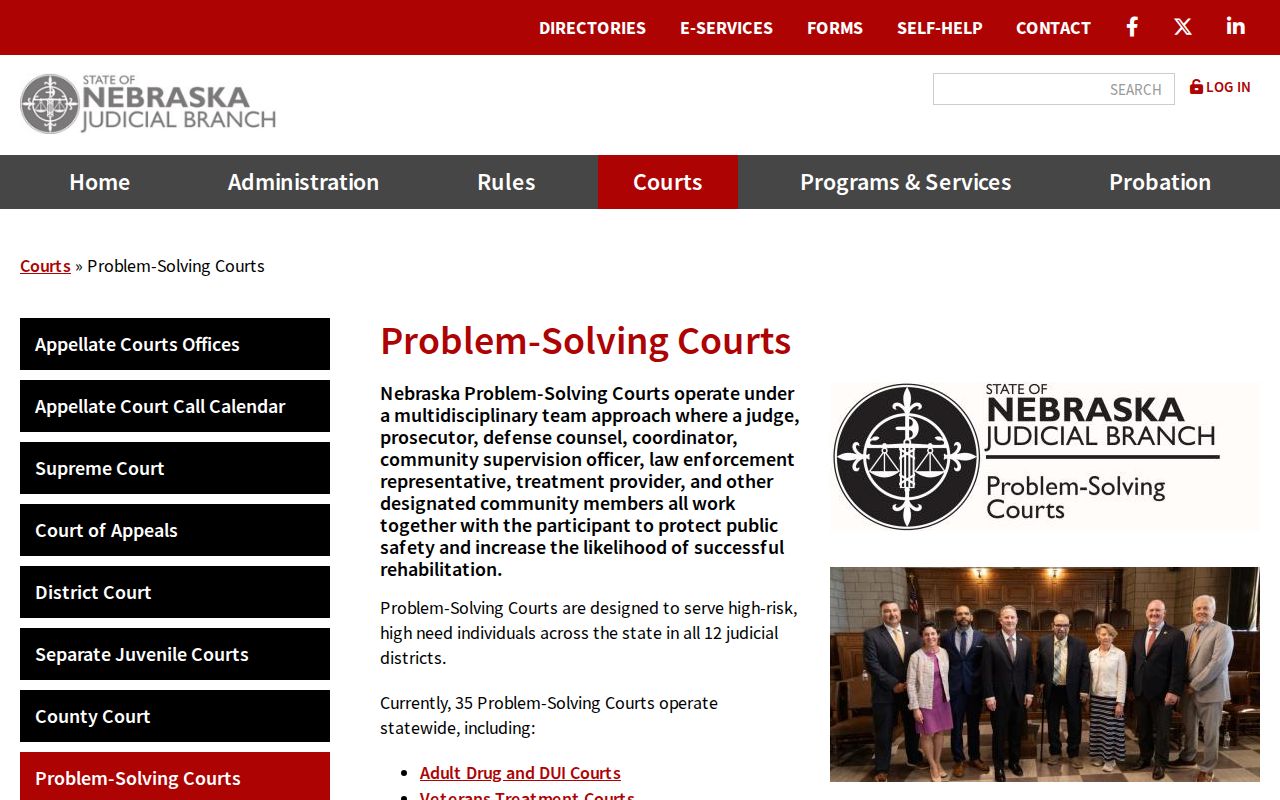
The Nebraska problem-solving courts overview provides statewide context for the court program category in the Howard filing data.
Howard County Criminal Case Codes
A Nebraska case number strings together the court, county number, case type, year, and an identifier. Two published examples are CR 14 20304 and D93 CI-14-0000019. Copy the exact live format from the case papers or notice. A type code helps with sorting. But it says nothing about the outcome or the next court date.
- CR
- A criminal case-type example in the documented Nebraska payment format.
- Register of actions
- The chronological record of docketed filings, hearings, orders, and recorded events.
- Setting
- A scheduled court event, such as an arraignment, motion hearing, trial, or review.
- Continuance or reset
- A postponed or rescheduled event. The former date should no longer be relied on.
Give the clerk the exact case number when you call, check the calendar, or ask for a copy. It beats guessing from a name. It also beats a code alone.
Public Access and Sealed Criminal Dockets
Nebraska opens its electronic court information to the public through JUSTICE, authorized remote providers, and public terminals. This stays within court rules and law. Remote access has limits, though. Attachments, images, older files, and some case categories may not appear online. Sealed, restricted, and juvenile material can stay out of ordinary results. That can happen even when the case exists.
Key access rules
Nebraska Supreme Court Article 8 sets public electronic-record access and restriction rules.
Neb. Rev. Stat. §43-2,108 limits access to juvenile files, reports, and probation material.
Neb. Rev. Stat. §29-3523 addresses criminal-history sealing and removal boundaries.
Read a criminal docket as court-record information, never as a verdict on a person. A missing result is not a final answer. Ask the clerk for the right access route to a sealed or restricted record.
Howard County Criminal Clerk Alternative
The courthouse route works when a one-time remote search falls short. Under Nebraska's records-search policy, a clerk may run a specific search if the requester gives a complete party name, case year, and case type. Identified documents can be copied by case number. The policy does not promise a broad historical search. Nor does it promise a certificate that no record exists.
Howard County Court Clerk
612 Indian Street, Suite #6
St. Paul, NE 68873
308-754-4192
For case-specific copies, certification, public-terminal assistance, and current instructions.
By mail, fax, or email, write to the clerk's published contact and spell out the case, the document, the date, and whether you need certification. When the online case detail leaves a records question open, start with the court records-search policy.
Howard County Criminal Copy Requests
A search result is not the same as a filed copy. Once you hold the case number, name the document title or the docket-entry date. Then say whether you want a certified or uncertified copy. Nebraska's CC 3:29 process is the documented route for a particular filed document. Transcripts and digital recordings run through a separate CC 1:14 process. That route may call for party or nonparty approval, an estimate, and payment up front.
For a hearing date, trust the court calendar and the latest notice. For a filed order, use the case number and a specific copy request. Keeping those apart matters. It stops a calendar entry from being mistaken for the full criminal case file. New filings go through Nebraska.gov eFiling, the authorized filing and notice route. It is not a public criminal-docket search. And ordinary email is not filing.
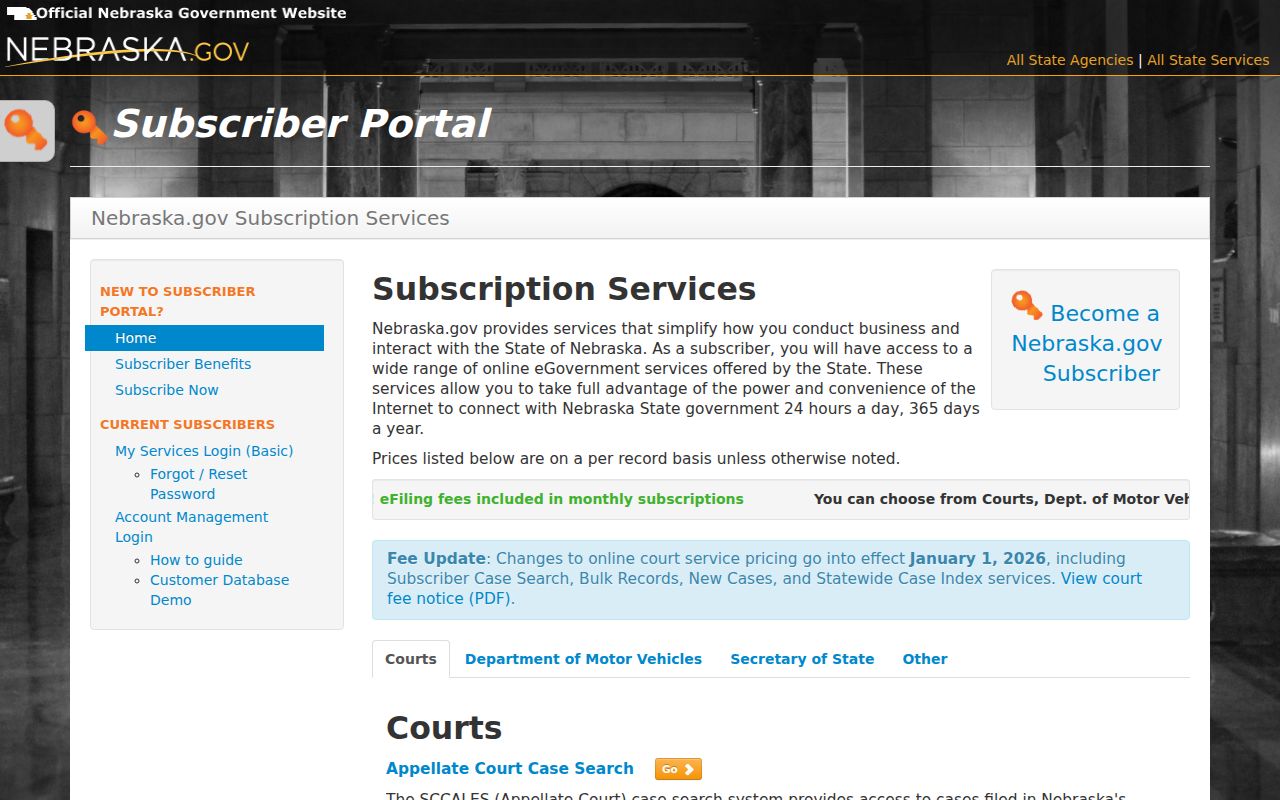
The official JUSTICE subscription information shows that repeated and image-intensive access follows a different route from a casual one-time search.
Howard County Criminal Program Context
Howard County's FY2025 County Court report counts six adult problem-solving-court filings. The official program material describes these courts as treatment, supervision, and accountability programs. They run within the judicial branch. Treat the filing category as court-system context. It is not a public search category that names participants.
Judge Karin L. Noakes is the District 8 district judge for Howard County. Her official biography lists North Central Problem-Solving Court among her public roles. Even so, a Howard criminal search starts where it always does: with the case's court and the statewide record system.
Howard County Criminal Federal Boundary
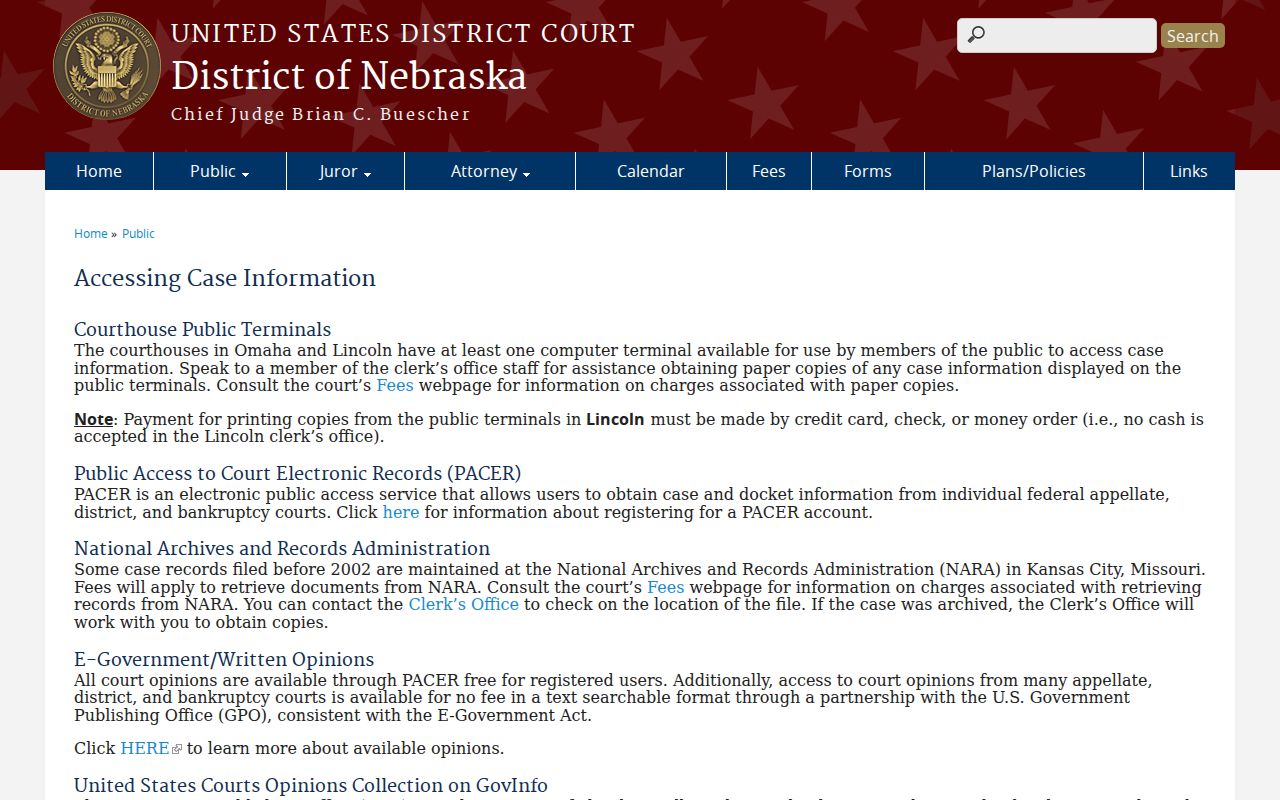
JUSTICE covers Nebraska state-court case information only. A federal criminal proceeding is a separate world, and a Howard County connection alone will not surface it there. Federal cases live in PACER and the U.S. District Court for the District of Nebraska access system, which also runs public terminals in Omaha and Lincoln.
The District of Nebraska public-access instructions describe the federal terminal route.